Quote:
Originally Posted by WSSix

That's awesome, John! Thanks for replying with the information. Do you have a website? I see the adjustable UCA supports. I'm interested in the other supports for the control arms both upper and lower. Can you share the results of your deflection testing?
I agree that a more race oriented car would flex the upper cowl from the triangulation bars. The forces put on a car during hard driving with sticky tires etc is so much greater than what a normal street car experiences. When I go to do my body, I was planning to make changes and add more support just because. I doubt I'd ever need it but while the body is in pieces, why not?
|
Thanks!
I don't have a website yet. When I figure out how to create one it'll be at lab-14.com and until then I'll continue to take orders through PMs etc. or by phone and take paypal or checks for payments. Hopefully I'll find the time to learn website set up soon.
The deflection testing I did can't really be compared to anything because I have a unique setup and the testing method can only be used to compare changes under the same conditions. So I'll give a bit of background and then discuss the tests I made. I am not done and will test other things as well.
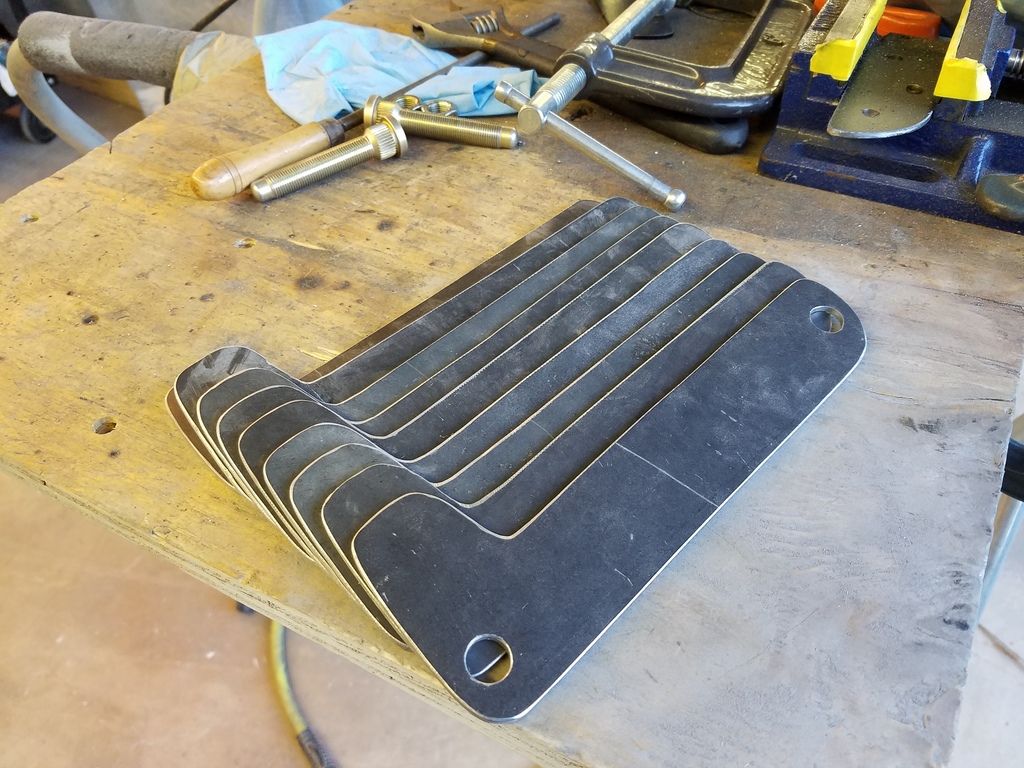
1st, I'm using a modified 80 sub frame in my 70 bird. To do so required relocating the rear body mounts and I decided to strengthen the rear section of the sub frame by boxing it at the same time. In addition to boxing the outside, small plates were welded to the inside so that solid body mounts would sit flat further strengthening it. So deformation of the section of the frame at the rear body mount has been minimized. The cowl area body mounts on the sub frame were also reinforced with thick metal plates to reduce flex and distortion. I sell the cowl body mount reinforcements also. pics below


In addition to the body mount modifications the upper control arm mounts have been modified with an additional steel plate welded on as well as using ARP studs with a wider splined area to keep the stud more stable. While the UCA modifications don't change the subframe deflection without the G-Braces they could (or do) affect the results when the G-Braces are in place. Plates are made for right/left UCA mounts and come with hardware to align for welding etc. as well as optional ARP studs. pics below


My deflection test was conducted under static conditions without the engine, front suspension, steering, etc in place and no sheet metal as seen in the previous post pics. The cowl and front section of the passengers compartment was filled with 400-500 lbs of weight. A piece of right angle stock was bolted to the body pinch weld at the lower cowl extending forward to the frame horns where an indicator was bolted to the front of the frame horn as seen in the pic in my previous post. PTFB solid body mount bushings were used torqued to 100 lbs and no frame connectors were used. A floor jack was used to lift the frame at the front of the frame rails with a 4 X 4 across the horns.
Without G-Braces the frame deflected over 3/4" before the body lifted off of the cribs I had holding it up.
With Pro G-Braces which were not preloaded (and no additional braces or reinforcements other than the ARP studs and welded UCA plates) deflection was reduced almost 1/2".
Adding upper cowl reinforcement plates sandwiching the ledge reduced deflection another 1/8"+.
Adding the adjustable lower braces for the upper control arm cross shaft mounting bolt/stud did not change anything. I really didn't expect them to because their job is to prevent wobble of the UCA mounting stud during high loads when the shocks are compressed or when on the throttle lifting the front end.
I did not test the additional triangulation braces that mount to the upper cowl because they're one of's and not something I'm currently selling. Also they're main functional is to reduce twisting during lateral loads which I'll be testing later on.
So the results were that the G-Braces combined with my reinforcements reduced the deflection (under the given conditions) to about 1/16- 3 /32. Using a couple tram gauges I determined that the deflection remaining wasn't forward of the cowl body mounts but was the floor of the body deflecting down at the rear body mounts.
Things to consider:
The testing I did was only to test vertical deflection. I did not test for reductions in the twist of the sub frame, maybe next time.
Vertical deflection of the sub frame occurs both upward and downward so my measured deflection and reductions may actually only be 1/2 (+ or -) of the total movement possible. Without putting the body on a frame rack I don't know if the same force up or down flexes the frame an equal amount in each direction.
The front end sheet metal provides additional support that was not there during my test. The upper inner fender of a 2nd gen is made like a frame rail and probably reduces deflection to some degree through the core support when solid body mounts are used.
I will conduct more tests when the car is assembled and frame connectors are installed. Also I'm sure I'm forgetting something as I did the tests a while back so if there's any questions fire away!
Long post and time for me to sleep. I'll write a post about lower control arm mount reinforcements tomorrow.