Quote:
Originally Posted by GregWeld

I'm having a friend that built many chassis and raced Trans Am cars and many other types... take a look at trying to understand the pluses and minuses of this style rear. So far --- and these are not new folks, they've been around for a long time in various versions --- the prevailing view is "WHY?" -- it's been described as "BUSY" -- "adds complication and parts without any advantages" -- "failure of the acell and decel links causes catastrophic failure when the pinion is free to rotate to the sky".... in other words -- it's more SUTTON SECRET SAUCE that is mostly hype/bullsh!t and dependence building (on him)
|
Being one who really can’t afford to change this setup, I’ll need to figure out how to make it work. Greg is correct about a link failure being catostrophic. I have made safety tethers for mine to prevent over rotation in either direction should a link bend or fail. What makes me think that is a probability and not a possibility? This is a Trans Am car back when they ran 3-links. The link sits almost next to you in a VERY beefy structure. You can see the adjustment knob and slot are also very beefy. This, for engines that make 500-550 ft. Lbs of torque.


Compared to what me, Greg, and others are using:
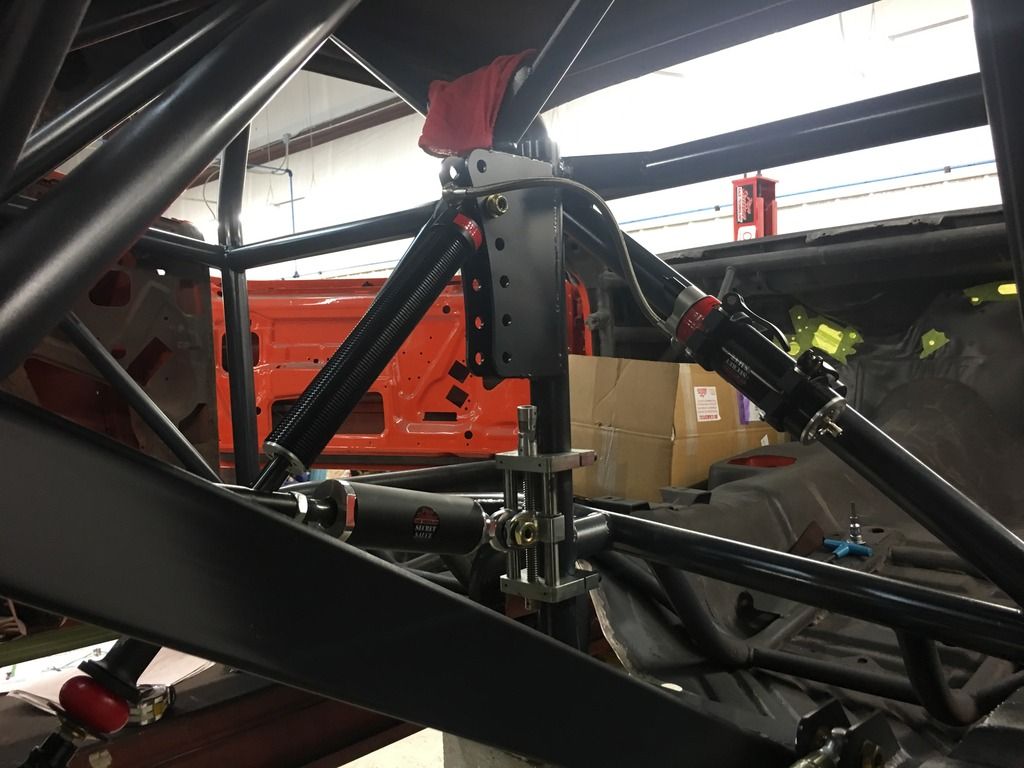
I found this concerning after assembling, the first thing I thought was, “holy crap, if this breaks or bends, nasty things will happen. Better make a pair of safety tethers”. Would have hoped the person designing this would have had the same fore thought.