Project Update for August 9th, 2019: You could say I am a little behind on build thread updates. We had a bit of a delay in 2018 when we moved out of our old shop, moved into the shop we built, and finished construction after we moved in. We went months without any "billable shop work" during that period, but we got back into the groove in Fall 2018. Then the main fabricator that worked on this car from the beginning left, but we got another man on the job, and kept it moving forward. So in the
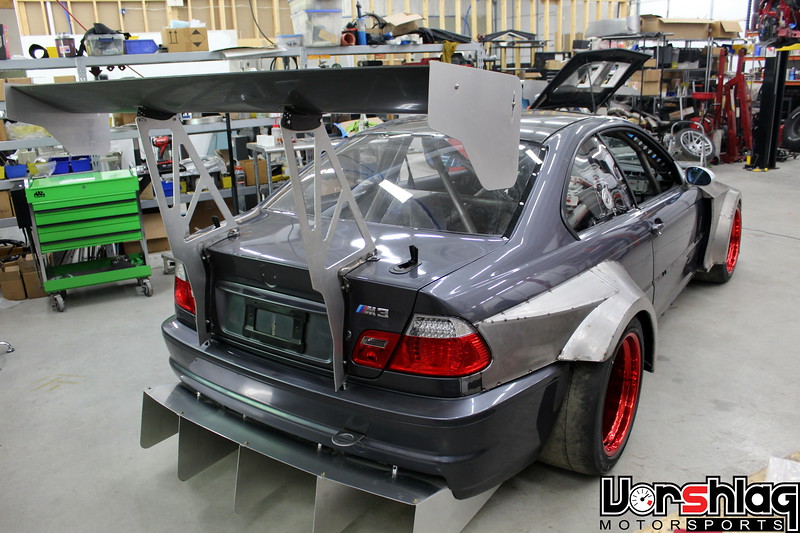
18 months since my last post in this thread we had some delays, but the M3 V8 build kept going - lots of detail work was finished, the aero was completed, the the Motec M150 was installed and dyno tuned, and we even test drove the car on track, then tweaked and tested some more.
To further our "forum" delay, we also had a total forum outage in 2019 that lasted nearly 3 months - a server update happened, which made our version of vbulletin obsolete, so we had to update that, then move to a faster server, then fought with some DNS name server issues. But by late July 2019 we had our forum back up, which is where we write and edit all of these forum build thread updates - that get pushed out to the forums we support.
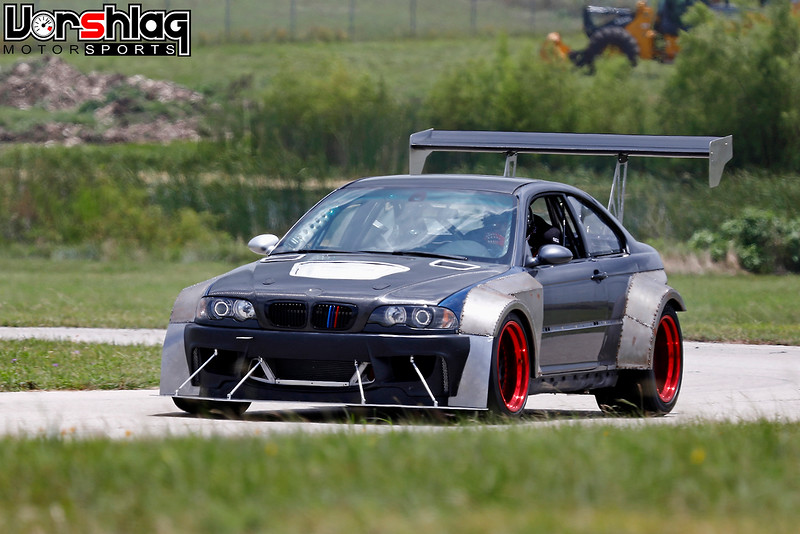
So all of my tardy update excuses are out of the way, and we have a couple of current 2019 teaser shots to show this car on track above. Now let's get caught up as much as we can in this post, covering late 2017 to early 2018 work.
MORE ON DRY SUMP OIL HOSES AND LINES
Last time I showed the start of the oil hoses and lines that are part of this 4 stage dry sump system. Since we built this we have tested, tweaked, and learned a lot about this system. Needless to say, a belt driven dry sump system is a complex, costly system with a lot of hoses getting oil to and from the remote oil tank, to the ARE dry sump pump, as well as through the remote oil filter and twin oil coolers. Also, being a part of Horsepower-Research (an engine shop that is about 5 miles from Vorshlag), which sells and installs a lot of ARE, Daily, Aviad and other dry sump oiling systems, has taught me a lot.
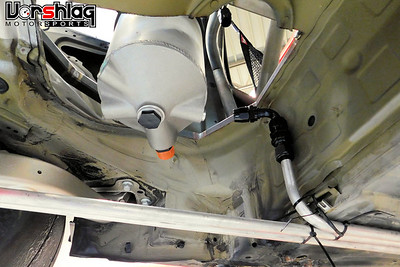
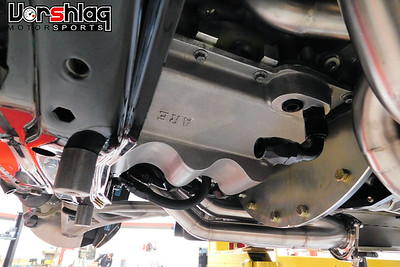
This 4 stage ARE pump sucks oil from the ARE oil pan (which is a funky shape) through 3 stages, goes through the pump (suction side), has a run back to rear, through the Spintric III oil/air separator, and into the oil settling tank. Above was where we were last time, routing the hoses and making the aluminum hard lines.
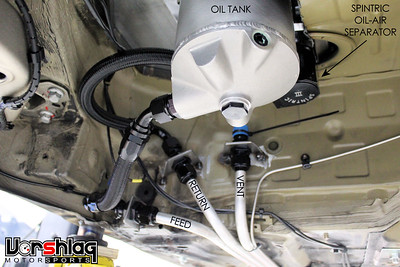

This pair of pictures shows the current setup. The "RETURN" line comes from the combined 3 suction stages, pushes oil back to the oil settling tank. This actually routes through the optional Spintric oil-air separator (shown above left) and that feeds oil into the TOP of the oil tank. Inside the oil tank are several "settling screens" or baffle plates inside that help the oil "settle" from foamy back to liquid form. As it goes through this cycle it works its way back to the bottom of the tank and out to the "RETURN" line, into the pump's pressure stage. The pressure stage then feeds oil back into the engine, as shown in the image above right. Hopefully the labels help make sense of all of this.

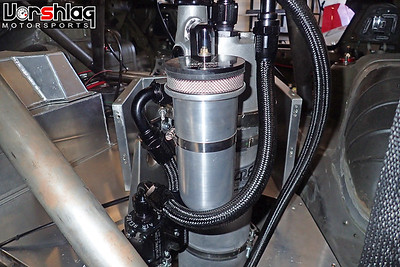
Inside this rear "enclosure" are the ARE oil settling tank (massive, tall unit), plus you can see the ARE breather to the left. We have actually
moved this breather tank to the trunk, and
mounted it much higher. This move was after a lot of testing and calls to the folks at ARE and some help from Erik at HPR.
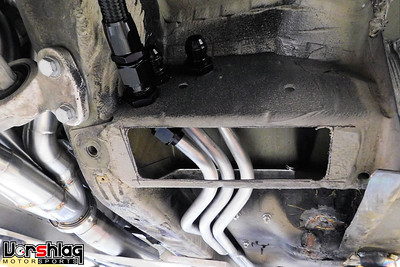

Getting the oil back and forth to the rear mounted oil tank was tricky, too. These long-ish runs to the rear mounted oil tank made it worthwhile to go from flex lines to 3/4" aluminum tubing for the runs under the car. There are 3 main lines going back and forth: from suction side of pump to tank, from tank to the pressure stage of the pump, and one vent line. We found out during dyno and track testing that we
do not need that vent line - it caused more trouble than it solved - but I will cover that in a future update.
A reader on one of the forums where this build thread is posted asked about the aluminum tubing, so I went out and took some pictures of the tubing and bender we used on this build.
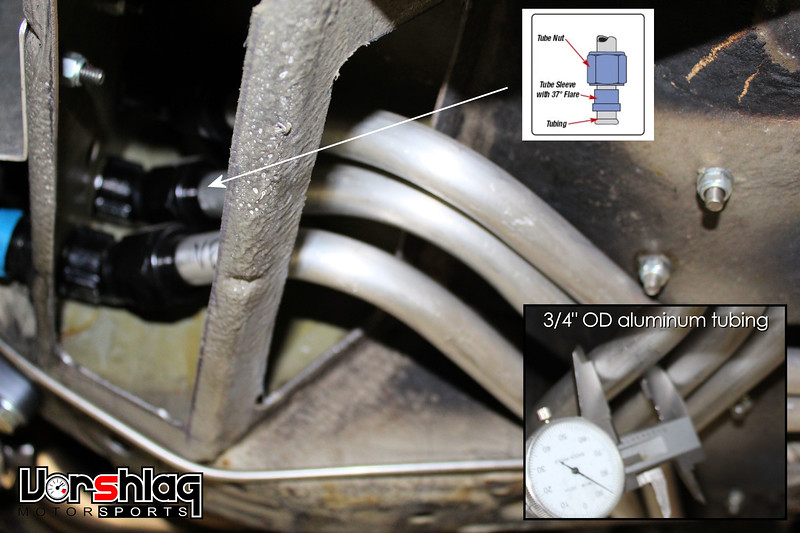
The aluminum tubing we used for the long runs of the oil lines to and from the dry sump oil tank is 3/4" OD. This stuff is common, lightweight, and inexpensive. It also comes in
numerous wall thicknesses, but even the thinnest wall (.049") is pressure rated at 1300 psi. The aluminum tubing is lighter, less costly, and less bulky for these long runs than the braided hose. We convert from hard to soft line at a bulkhead connector at the ends of each run. Of course if you keep the dry sump tank closer to the engine you can avoid these long runs.
The ends of the tubing are flared for 37° JIC fitting, with a tube nut and sleeve attached before flaring. That picture in the inset above is pretty self explanatory, but you can always look up "tube nuts and sleeves" to see what to get and where. All of the major fittings suppliers can source these parts and the tubing. We stick with Fragola, which is made in the USA.

The 3/4" oil line tubing was bent with our RDB-25 Baileigh manual tubing bender. We bought this $295 kit specifically to do these small diameter plumbing bends as well as some small diameter structural tubing on some cars.

There are some 1" and smaller tubing sections we use in areas that we would prefer to crumple in a crash, to avoid wadding up a chassis or roll cage. This '69 Camaro front nose has some of that smaller tubing in place. We also have mandrels for our JD2 tubing bender down to 1" OD, which come in handy for this small stuff too.


Back to the oil lines. So there are a lot of these hoses and tubing on this car, and a big batch of them run along the driver's side behind the strut. The extreme steering angle of a SLR Racing control arms (more on that later) made us create a "shield" around the back side of the LF wheel well. We also limited the steering rack with spacers, and it still has a lot more turning angle than stock.
continued below