Our success can be attributed to a complete, engineered package. Simply dropping in air springs will not net the numbers achieved by our Chevelle.
Control Arms:
We base our StrongArms off the factory arms, but we alter areas that need addressed; camber, caster, ball joint angles, etc. They also lower unsprung weight, and the overall weight of the vehicle (on the PHR G28 project, they saved 80lbs when replacing the stock suspension with our entire package)
Spindles:
The Fatman GMax spindles are a "taller" design, meaning they locate the upper ball joint higher than the stock unit. This increases negative camber gain under compression.
Sway Bars:
Our Muscle bars (and now PosiLink sway bar links) aid the suspension in limiting body roll, but are not so stiff as to induce negative handling.
Control System:
By utilizing a 4-way compressor control system we can eliminate air passing from one bag to another. It also allows us the ability to change spring rates in each air spring. A change of 5psi can provide the needed extra spring rate while maintaining the same ride height.
Air Springs:
By design air springs have a very progressive spring rate. The more the spring is compressed, the higher the spring rate. By choosing the proper air spring for the application, and setting them at the proper height, we lower the car (lowering COG), and gain the progressive spring rate when we need it. Instead of the suspension hitting the bump stops, the air spring will increase its rate, providing a solid, predictable vehicle in the corners.
Variable Dampers:
We use double adjustable shocks in all the vehicles we run on a road course or Auto-X. The damper is simply a timing device. It controls when, and for how long, the tires are in contact with the tarmac. It also allows us to control how quickly our spring rate is increased or decreased. The more compression damping I throw at the Chevelle, the slower the spring rate increases. The same is true for extension; the more extension damping I dial in, the slower the spring rate decreases.
When all these areas are engineered together you can achieve a very well mannered car during track use. But you also have the advantage of a comfortable street cruiser.
I stated this in another post, but I feel it's worth mentioning again: Our cars are set up by our staff, not a trained, professional driver. I grew up in a family that raced Dirt Late Models (
http://www.latemodelracer.com/) so I understand vehicle dynamics. However, I have a degree in Classic English Literature; I'm not a trained engineer. A little common sense goes a long way (and growing up under 880HP 430cid small blocks in a 2100lb car sliding around a slick dirt track didn't hurt. Maybe I should see if Bret will let me try drifting?)!
















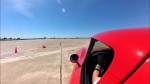 Brian Hobaugh SCCA National Tour June 2014
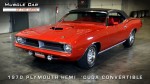 First Hemi 'Cuda Convertible Ever Built
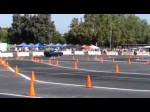 Short clips: Goodguys Pleasanton autocross and pit videos


 Threaded Mode