Quote:
Originally Posted by GregWeld

So there's really TWO installs in this thread.... one guy had all manor of electrical issues... and my guess is those issues were there well before the EFI system was installed. Low voltage at idle - inadequate charge at idle with various load items. Imagine now that he always had that issue.... but now installs an electric fuel pump (a new load) and an ECU - etc... once he provided ADEQUATE grounds -- and low rpm voltage - his problems were cured. He did discover a bad MAP sensor --- and that is something that shouldn't happen but it did.
The other guy that can't seem to get his running at all -- really doesn't provide us any details what he's done as far as installation -- or what checks he's done or what issues he's having or any pics of his car etc -- SO we're left guessing how or what he's working with.... and I can tell you for certain - that many peoples electrical skills and circuit knowledge are less than "stellar".
I'm aware of some delays in the 2.0 system inventory... too many sales? Or a manufacturing issue - or parts supplier... hard to know that.
The one install worked thru his systems issues -- which weren't his systems issues at all - but rather a weak electrical system and possibly some real poor ground issues. Once those were resolved he seemed very happy with his system.
That's what I'm usually trying to point out. These are DIY installs -- we have little knowledge of the skills of the installer - his electrical knowledge -- what all the parts of the "hot rod" are that he's working on etc. But in all the work I've done on these (and XFI) systems -- I've never once found the system itself to be at fault. When they're installed properly with a good working healthy electrical system... they do, in fact, work really well. That's not to say every part a manufacturer is going to ship is going to be 100% perfect because we've all gotten defective stuff. I know I certainly have.
I just bought a factory crate LS3 480 hp GM motor and a factory ECU.... the electrical on this car is far superior to most cars on the road... but it's going to the tuner because it constantly stalls and has too low of idle RPM's. All factory stuff -- and then talking to people that install these regularly = they tell me - oh yeah - they all need work because they won't run right out of the box. Okay... to the tuner it goes on Monday. I'm confident it's a very simple adjustment of either the IAC or the fuel mapping or idle rpm settings... To me it's no different than when I'd pull a carb out of a box --- and then spend a lot of time getting the fueling right... jets - pumps - accelerator pumps... idle bleeds... it was easy though because we've been doing it for years. EFI is new to most and there's a lot of knowledge "missing" or people that are right around the block that can come over to help.
|
Three installs Greg.
Don't get me wrong, these systems are not up to what the factory units provide. It just depends on what you are trying to get done and how you want to do it.
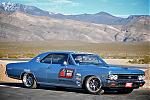
I did not want to see a modern looking engine in our '66 Chevelle SS convertible. I did however want to take a couple hundred pounds out of the car, get the car's weight distribution better, and have fuel injection while keeping a retro look. I would not have taken the big block out if I had to look at a factory plastic LS intake. This system allowed us to install the original 14" air cleaner and keep an original appearance.
The FAST 2.0 system has worked very well for us so far. Only issue we have had was a timing problem due to the LS platform. With this being the first running LS powered car I knew we might have a few hurdles to jump. This was quickly resolved and we have racked up over 3,000 miles since with zero problems.
Bonus with a system like this too is you can take it out of one car and put it on a completely different set up. if I ever want to switch the LS over to factory EFI or put on a blower, the FAST system could easily be moved to my big block Camaro.
















 Brian Hobaugh SCCA National Tour June 2014
 First Hemi 'Cuda Convertible Ever Built
 Short clips: Goodguys Pleasanton autocross and pit videos




 Threaded Mode