...

Go Back   Lateral-g Forums > Technical Discussions > Paint and Body
User Name
Password


Reply
 
Thread Tools Display Modes
  #1  
Old 02-11-2011, 07:01 AM
DOOM's Avatar
DOOM DOOM is offline
Lateral-g Supporting Member
 
Join Date: Jan 2007
Location: South Side Chicago
Posts: 2,912
Thanks: 7
Thanked 64 Times in 40 Posts
Default

Honestly, Trying to get it figured out with a MIG is totally different then a TIG. If you scribe tight light to trim and fit you can tack it up with the MIG. But learning how to weld sheetmetal is like trying to learn how to ride a bicycle when you want to ride a unicycyle. Just start now with the tig on 20amps and maybe buy some MIG wire to not build up your welds to much while your learning. The TIG welders out number MIG welders 5-2 in my shop and all my MIG welders are 110 volt except 1. I have 1 220 volt MIG.

Spend your time learning how to trim and fit sheetmetal very tight. Then learn to tack with the TIG.

Thanx for the pictures Roger!! I been avoiding my tig welder but I know its time to pull it out and start learning. It's a Hobart EZ-TIG 165i I figured this would be a simple machine to start with. I have spent more time fitting and it does make a big difference...
__________________
Mario
USCOLLISION
Reply With Quote
  #2  
Old 02-11-2011, 08:28 AM
ironworks's Avatar
ironworks ironworks is offline
Senior Member
 
Join Date: Oct 2005
Location: Bakersfield, Ca
Posts: 5,156
Thanks: 4
Thanked 35 Times in 21 Posts
Default

Quote:
Originally Posted by DOOM View Post

Thanx for the pictures Roger!! I been avoiding my tig welder but I know its time to pull it out and start learning. It's a Hobart EZ-TIG 165i I figured this would be a simple machine to start with. I have spent more time fitting and it does make a big difference...
Just buy some flat sheet (18gauge) cut some strips and weld it back together. If yo ever want to be the internet superstar Jason (WAR) #9 is, you will have to become one with you TIG. Cut and fit, tack it together, and weld little bits. Weld about aninch and cool it with the Air hose. Weld another inch, then cool it. Repeat this process for about 12-16 inches. Then sand just the weld smooth not the base metal. Maybe use a die grinder wheel to knock the top off.


This thread makes me think we should offer a class or seminar for this skill. It's not hard, but just takes practice and experience. But having some weekend guidance would good.
__________________
www.ironworksspeedandkustom.com
Reply With Quote
  #3  
Old 02-11-2011, 08:53 AM
GregWeld's Avatar
GregWeld GregWeld is offline
Lateral-g Supporting Member
 
Join Date: Jul 2005
Location: Scottsdale, AriDzona
Posts: 20,741
Thanks: 504
Thanked 1,080 Times in 388 Posts
Default

Quote:
Originally Posted by ironworks View Post
Just buy some flat sheet (18gauge) cut some strips and weld it back together. If yo ever want to be the internet superstar Jason (WAR) #9 is, you will have to become one with you TIG. Cut and fit, tack it together, and weld little bits. Weld about aninch and cool it with the Air hose. Weld another inch, then cool it. Repeat this process for about 12-16 inches. Then sand just the weld smooth not the base metal. Maybe use a die grinder wheel to knock the top off.


This thread makes me think we should offer a class or seminar for this skill. It's not hard, but just takes practice and experience. But having some weekend guidance would good.
Don't forget to clamp your work! (even while practicing) Welding is more than just making a pretty little puddle -- it's as important, if not more important, to have the work NOT WARP!

Just for those reading this thread -- take the two strips Rodger suggests -- lay them flat side by side -- then just do a nice tack at one extreme end. Look at the other end - the gap will have grown!

To do this properly -- clamp the crap out of it (both strips) = tack one end - then the other end - then the middle - then split that again. Now the gap won't move on you.... BUT if you unclamped and finished your weld - the piece will warp... so you leave your clamps --- move them as required to work - and keep it clamped to the flat work space. Weld and cool and weld and cool and keep cooling before you unclamp. It will still warp but that's what you'd work out with a hammer and dolly if you're doing this on a body part.

Remember -- every time you melt (heat) the metal - that area GROWS - and that area also SHRINKS as it cools. The one little spot you melted - and then shrunk is going to move differently than all the other larger metal around the weld area. Clamping and controlling your heat is the way you're trying to control the movement as much as possible... but there is also WHERE you choose to place your welds - because HOW and WHERE you weld will also help counteract the movement.

To picture this in your head -- think of welding a "T" --- (I can't make the T upside down but picture it that way). SO make an inside corner weld on one side of the T and the T won't be straight anymore... but if you tacked the two ends and tacked in the middle = Tack one end on one side and the other tack on the end on the OPPOSITE side.. Check for 90* at this point and adjust - tack the middle - check again and adjust... Now weld a bit on ONE SIDE and then your next weld needs to be on the OPPOSITE side. The metal will pull to the side you welded on -- then will pull back to the direction your next weld was on.

It's all kind of hard to explain via these forums but trust me when I tell you - there's more to "welding" than just the bead.

The other thing amateurs do is they fit up the piece -- then start tacking or whatever. They never pick up a hammer and dolly, or whatever tool they need to use, and ADJUST the piece as they go. They just weld away - then when they're done they wonder why it doesn't look all pretty like the pictures of other guys work. You've got to "work" the metal as you go IF necessary... to keep warpage down - to keep the gap tight - and blah blah blah. It's not just fit once and weld it. This stuff takes some patience and some some eyeball time - and adjustment as you go.

Reply With Quote
  #4  
Old 02-11-2011, 09:39 AM
DOOM's Avatar
DOOM DOOM is offline
Lateral-g Supporting Member
 
Join Date: Jan 2007
Location: South Side Chicago
Posts: 2,912
Thanks: 7
Thanked 64 Times in 40 Posts
Default

This thread makes me think we should offer a class or seminar for this skill. It's not hard, but just takes practice and experience. But having some weekend guidance would good.
__________________
Roger I would fly out for that in a heart beat!! I think its a great idea!!!And I would'nt care what it cost just to get some hands on training from the pros would be invaluable!!!!!!!!!!!
__________________
Mario
USCOLLISION

Last edited by DOOM; 02-11-2011 at 09:57 AM.
Reply With Quote
  #5  
Old 02-11-2011, 10:09 AM
parsonsj parsonsj is offline
Lateral-g Supporting Member
 
Join Date: Aug 2004
Location: Winter Springs, FL
Posts: 659
Thanks: 0
Thanked 1 Time in 1 Post
Default

Quote:
Originally Posted by Greg
The other thing amateurs do is they fit up the piece -- then start tacking or whatever. They never pick up a hammer and dolly, or whatever tool they need to use, and ADJUST the piece as they go. They just weld away - then when they're done they wonder why it doesn't look all pretty like the pictures of other guys work. You've got to "work" the metal as you go IF necessary... to keep warpage down - to keep the gap tight - and blah blah blah. It's not just fit once and weld it. This stuff takes some patience and some some eyeball time - and adjustment as you go.

So true. I know it took me some time under helmet before I started to work the metal as I went -- and I thought I was "cheating", or lacked the skill to cut the metal to fit properly as I went. Now I don't do much welding on outer body panels; my sheet metal welding is relegated to the interior and bottom of the car. So I don't use TIG. It's too hard to get all three hands needed into position when welding up a toe board from inside the car.

I think the reason that working the metal isn't as well-known as it ought to be is that the typical body panel replacement article in magazines doesn't cover it. I've not seen it, and most certainly the notion of MIG tack-welds followed by TIG finish-welding hasn't been covered.

jp

ps. BTW, great thread!
__________________
John Parsons

II Much Fabrication's Blog New products, Fabrication sequences, etc.
Reply With Quote
  #6  
Old 02-11-2011, 10:30 AM
ironworks's Avatar
ironworks ironworks is offline
Senior Member
 
Join Date: Oct 2005
Location: Bakersfield, Ca
Posts: 5,156
Thanks: 4
Thanked 35 Times in 21 Posts
Default

Quote:
Originally Posted by DOOM View Post
__________________
Roger I would fly out for that in a heart beat!! I think its a great idea!!!And I would'nt care what it cost just to get some hands on training from the pros would be invaluable!!!!!!!!!!!
Ok Tomorrow morning and 1 million dollars. I will cover lodging and airfare and food.
__________________
www.ironworksspeedandkustom.com
Reply With Quote
  #7  
Old 02-11-2011, 12:04 PM
wellis77's Avatar
wellis77 wellis77 is offline
Senior Member
 
Join Date: Nov 2009
Posts: 326
Thanks: 0
Thanked 0 Times in 0 Posts
Default

This thread has easily become one of the best I've read. Thank you to all who have contributed, and thank you to Mario for stepping out and asking the first questions. I have learned a lot and can not wait to get back to town Sunday night and start working on this stuff.
__________________
Will Ellis
Project SCUD, 1969 Dodge Dart Swinger, 1/2 Dart / 1/2 Viper
Reply With Quote
  #8  
Old 02-11-2011, 04:07 PM
GregWeld's Avatar
GregWeld GregWeld is offline
Lateral-g Supporting Member
 
Join Date: Jul 2005
Location: Scottsdale, AriDzona
Posts: 20,741
Thanks: 504
Thanked 1,080 Times in 388 Posts
Default

Quote:
Originally Posted by ironworks View Post
Ok Tomorrow morning and 1 million dollars. I will cover lodging and airfare and food.
Mario -- I'd do it for a buck....
Reply With Quote
  #9  
Old 02-11-2011, 06:50 PM
ccracin's Avatar
ccracin ccracin is offline
Senior Member
 
Join Date: Sep 2006
Location: Rostraver, PA
Posts: 2,077
Thanks: 0
Thanked 4 Times in 4 Posts
Default

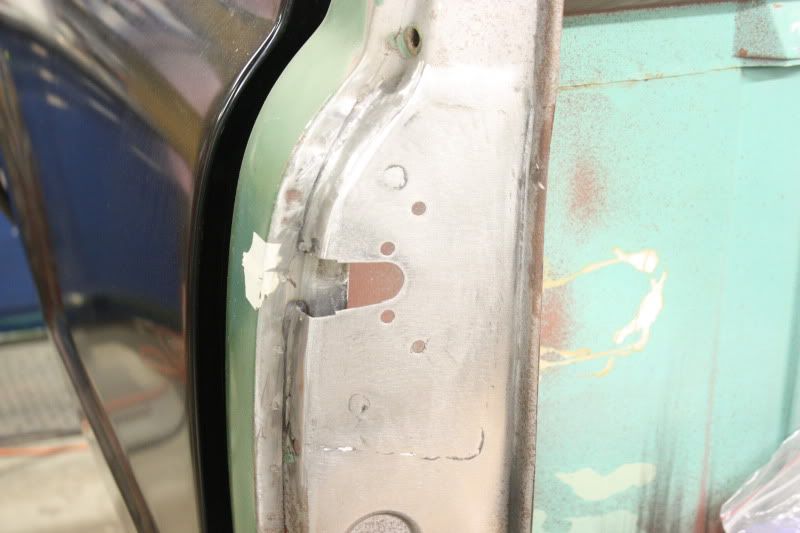
This is a great thread. Especially for me as I am also trying to learn with the new Tig welder. I have been reading and practicing. Things are going better. I'm a visual person. Here is the result of the best I have done so far. I am far from happy, but mind you I've only burned about 4 filler rods with the TIG so far.


I spent a lot of time fitting the panel I made. It was good, but the second one is better. As usual. I am getting ready to start welding the second one. I have it tacked in. Look along the bottom. I was trying to keep everything fitting as I went using a hammer and dolly. I didn't make a weld longer than 1/2" at a time before cooling. I was also hammering the welds as I went to try and keep the panel from shrinking in. When I was done and started the grinding/sanding I realized the panel I added along the bottom was slightly proud. You can see this in the photo. Any suggestions as to how to work this out? A small amount of filler will cover as it is only about 5-10 thou. proud, but I would like to make it better. The same thing happened with the 2 plug weld spots you can see.

This brings me to my next question. What happens when you are butt welding sheet metal and you can't get to the back side to hammer the welds and work the joint? No matter how slow I go and how small the welds are, I almost always end up with the weld bead/HAZ low. Do you use a stud gun or something to raise that area? I will be getting to these types of welds very soon. That's enough for now. Any comments/advice good and bad will be greatly appreciated.

I don't mind others learning from my mistakes!
__________________
Chad
Instagram - @cctek
https://https://www.facebook.com/CCTek

68 Chevy Pickup Project
Build Thread: https://lateral-g.net/forums/showthread.php4?t=7505

THANKS TO: A&M Machine and Fabrication, CCTek (http://www.candctek.com), Hermance Design(www.hermancedesign.com), Paradise Road Rod & Custom, Harry Opfer Welding, Wegner Automotive Research, Clayton Machine Works
Reply With Quote
  #10  
Old 02-11-2011, 09:49 AM
DOOM's Avatar
DOOM DOOM is offline
Lateral-g Supporting Member
 
Join Date: Jan 2007
Location: South Side Chicago
Posts: 2,912
Thanks: 7
Thanked 64 Times in 40 Posts
Default

Quote:
Originally Posted by GregWeld View Post
Don't forget to clamp your work! (even while practicing) Welding is more than just making a pretty little puddle -- it's as important, if not more important, to have the work NOT WARP!

Just for those reading this thread -- take the two strips Rodger suggests -- lay them flat side by side -- then just do a nice tack at one extreme end. Look at the other end - the gap will have grown!

To do this properly -- clamp the crap out of it (both strips) = tack one end - then the other end - then the middle - then split that again. Now the gap won't move on you.... BUT if you unclamped and finished your weld - the piece will warp... so you leave your clamps --- move them as required to work - and keep it clamped to the flat work space. Weld and cool and weld and cool and keep cooling before you unclamp. It will still warp but that's what you'd work out with a hammer and dolly if you're doing this on a body part.

Remember -- every time you melt (heat) the metal - that area GROWS - and that area also SHRINKS as it cools. The one little spot you melted - and then shrunk is going to move differently than all the other larger metal around the weld area. Clamping and controlling your heat is the way you're trying to control the movement as much as possible... but there is also WHERE you choose to place your welds - because HOW and WHERE you weld will also help counteract the movement.

To picture this in your head -- think of welding a "T" --- (I can't make the T upside down but picture it that way). SO make an inside corner weld on one side of the T and the T won't be straight anymore... but if you tacked the two ends and tacked in the middle = Tack one end on one side and the other tack on the end on the OPPOSITE side.. Check for 90* at this point and adjust - tack the middle - check again and adjust... Now weld a bit on ONE SIDE and then your next weld needs to be on the OPPOSITE side. The metal will pull to the side you welded on -- then will pull back to the direction your next weld was on.

It's all kind of hard to explain via these forums but trust me when I tell you - there's more to "welding" than just the bead.

The other thing amateurs do is they fit up the piece -- then start tacking or whatever. They never pick up a hammer and dolly, or whatever tool they need to use, and ADJUST the piece as they go. They just weld away - then when they're done they wonder why it doesn't look all pretty like the pictures of other guys work. You've got to "work" the metal as you go IF necessary... to keep warpage down - to keep the gap tight - and blah blah blah. It's not just fit once and weld it. This stuff takes some patience and some some eyeball time - and adjustment as you go.

Greg I've made every mistake you talked about!!
__________________
Mario
USCOLLISION
Reply With Quote
Reply

Thread Tools
Display Modes

Posting Rules
You may not post new threads
You may not post replies
You may not post attachments
You may not edit your posts

BB code is On
Smilies are On
[IMG] code is On
HTML code is Off

Forum Jump


All times are GMT -7. The time now is 08:29 AM.


Powered by vBulletin® Version 3.8.11
Copyright ©2000 - 2026, vBulletin Solutions Inc.
Copyright Lateral-g.net