|
|

05-20-2013, 06:26 PM
|
 |
Senior Member
|
|
Join Date: May 2013
Location: Folsom, CA
Posts: 2,422
Thanks: 45
Thanked 35 Times in 26 Posts
|
|
We have had all of our race car engines on the dyno ... and then the whole car on a quality Superflow chassis/wheel dyno over the last 8 years.
This is around 35-40 cars & engines ... some with manual trans & 9" Fords & some with direct drive & quick change rear ends.
For all the "standard" drivetrains, we measured 18.1-18.8% difference (loss) from the engine dyno.
For cars we reduced the parasitic losses in ... with REM polished gears, ceramic bearings, no drag seals, lightened gears, etc ... we saw 16.4-16.8% difference (loss) from the engine dyno.
But we never lightened up parts that would have reduced the reliability, like driveshafts, u-joints, etc. More could be gained, but the risk wasn't worth it to us.
Last edited by Ron Sutton; 05-20-2013 at 06:42 PM.
|
05-20-2013, 06:31 PM
|
 |
Senior Member
|
|
Join Date: Aug 2012
Location: Dawsonville Georgia
Posts: 2,256
Thanks: 653
Thanked 187 Times in 126 Posts
|
|
We lightened driveshafts, and lost power due to shaft flex causing harmonics.
|
05-20-2013, 06:36 PM
|
 |
Moderator
|
|
Join Date: Sep 2005
Location: NorCal
Posts: 9,180
Thanks: 58
Thanked 159 Times in 105 Posts
|
|
Quote:
Originally Posted by 69znc

Not trying to compare auto vs manual. I was only trying to understand the urban legend of 10-15% lose for manual. Can not find any facts to back this up and I think the low 20's is more realistic. I cannot even find an empirically supported 12 - 18%. The best is 18.5 with a lot of transmission work and very light axles. All the rest are the 20's.....
|
Sorry, I missed that in your first post.
Just for a reference, when I was in the Porsche world for a couple years. Engine to chassis dyno conversions were routinely in the 12-15% range.
I have read about sub 10% losses for NASCAR... any truth to it, Che70velle?
__________________
2004 NASA AIX Mustang LS2 #14
1964 Lincoln Continental
2014 4 tap Keezer
|
05-20-2013, 06:39 PM
|
 |
Senior Member
|
|
Join Date: Dec 2009
Posts: 5,044
Thanks: 6
Thanked 9 Times in 6 Posts
|
|
I have read there is also dimishing returns at higher horsepower engines. In other words, 15% (or so) at 550 - 650 hp, maybe a percent or two less over 750.
I have never seen proof of this theory though.
|
05-20-2013, 06:47 PM
|
|
Senior Member
|
|
Join Date: May 2013
Location: Folsom, CA
Posts: 2,422
Thanks: 45
Thanked 35 Times in 26 Posts
|
|
That's interesting Scott.
For our race teams, not finishing races due to parts failure was unacceptable.
So we went the other direction. Stronger driveshafts (3"), bigger u-joints (1350's not 1310's or 1330's), nothing "borderline".
|
05-20-2013, 06:51 PM
|
|
Senior Member
|
|
Join Date: May 2013
Location: Folsom, CA
Posts: 2,422
Thanks: 45
Thanked 35 Times in 26 Posts
|
|
I forgot ... we did run some powerglide automatics for 1 season & did chassis dyno test them.
These ran NO converter, nor clutch, so they were light & designed to lock the gearsets hard. With only 2 light gear sets & nothing else they used less power than typical automatics.
The numbers were 19.1-19.4% difference (loss) from the engine dyno.
But, I don't think we can compare these #'s to the automatics in street cars, even well built pro touring cars.
|
05-20-2013, 07:09 PM
|
|
Senior Member
|
|
Join Date: Aug 2012
Location: Dawsonville Georgia
Posts: 2,256
Thanks: 653
Thanked 187 Times in 126 Posts
|
|
Quote:
Originally Posted by Ron Sutton
That's interesting Scott.
For our race teams, not finishing races due to parts failure was unacceptable.
So we went the other direction. Stronger driveshafts (3"), bigger u-joints (1350's not 1310's or 1330's), nothing "borderline".
|
We found this during testing on dynos, not on the track. Same philosophy here.
|
05-20-2013, 07:07 PM
|
|
Senior Member
|
|
Join Date: Aug 2012
Location: Dawsonville Georgia
Posts: 2,256
Thanks: 653
Thanked 187 Times in 126 Posts
|
|

Quote:
Originally Posted by Flash68
Sorry, I missed that in your first post.
Just for a reference, when I was in the Porsche world for a couple years. Engine to chassis dyno conversions were routinely in the 12-15% range.
I have read about sub 10% losses for NASCAR... any truth to it, Che70velle?
|
Actually yes, there are those types of numbers out there, but again, this technology does not apply AT ALL to anything that you'll see on here, which is why I spoke about "real world" experience. The money going into drivetrain testing is in the millions of dollars, in the NASCAR world.
I worked for a firm that built cup engines, but also did testing on things such as lightweight reciprocating assemblies vs. lap times, which would take months to complete, and cost several million dollars also...The results would surprise you. We were involved in early development of many things that most people would call BS on. Some stuff I can talk about, some stuff I can't.
The owner of this firm is a dear friend of mine. He was behind Cale Yarborough at the Daytona 500 in the late 70's, when Cale blew up. No big deal, until you find out he broke 8 rods...carbon fiber rods. This was Late 70's! Totally off topic, but true.
|
05-20-2013, 08:23 PM
|
 |
Senior Member
|
|
Join Date: Oct 2007
Location: winnipeg
Posts: 725
Thanks: 0
Thanked 0 Times in 0 Posts
|
|
Quote:
Originally Posted by Che70velle
Actually yes, there are those types of numbers out there, but again, this technology does not apply AT ALL to anything that you'll see on here, which is why I spoke about "real world" experience. The money going into drivetrain testing is in the millions of dollars, in the NASCAR world.
I worked for a firm that built cup engines, but also did testing on things such as lightweight reciprocating assemblies vs. lap times, which would take months to complete, and cost several million dollars also...The results would surprise you. We were involved in early development of many things that most people would call BS on. Some stuff I can talk about, some stuff I can't.
The owner of this firm is a dear friend of mine. He was behind Cale Yarborough at the Daytona 500 in the late 70's, when Cale blew up. No big deal, until you find out he broke 8 rods...carbon fiber rods. This was Late 70's! Totally off topic, but true.
|
What CAN you talk about? me and Dave will blow up your PM box soon.
__________________
97 Sonoma "NERA": Pile O Sh*t. Literally.
|
05-20-2013, 09:26 PM
|
|
Senior Member
|
|
Join Date: Jun 2007
Location: Birmingham, AL
Posts: 849
Thanks: 0
Thanked 4 Times in 4 Posts
|
|
Peter, this is easy. Surely NRE did an engine dyno. So just strap your ride down to a chassis dyno and let us know the result  .
Seriously though I've put some thought into this lately as well. Primarily because I can't figure out why the LS setups put down so much rwhp compared to some pretty strong big block combos. I would generally think flywheel hp was flywheel hp regardless of it being LS, BBC or even a Ferd FE  .
However, I then read a few examples where some solid 600+hp BBC builds were only getting high 400/low 500 rwhp numbers. That would support the closer to 20% drivetrain loss figure.
On the other hand, it seems fairly common/easy to get 500 rwhp out of an LS3. I know they are efficient and all but geez. Similar rwhp and 100 less cubes???? I also can't see a basic LS3 putting out 600 flywheel HP to start with.
That just doesn't seem to add up so I gotta think drivetrain differences maybe. Most certainly any BBC rwhp number you'll find is likely through an auto trans so that may explain some of it.
__________________
John
'71 Nova ( Build thread)
FFR Roadster
|
| Thread Tools |
|
|
| Display Modes |
 Hybrid Mode Hybrid Mode
|
 Posting Rules
|
You may not post new threads
You may not post replies
You may not post attachments
You may not edit your posts
HTML code is Off
|
|
|
All times are GMT -7. The time now is 03:02 AM.
|
















 Brian Hobaugh SCCA National Tour June 2014
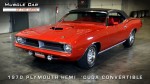 First Hemi 'Cuda Convertible Ever Built
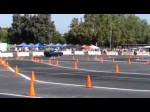 Short clips: Goodguys Pleasanton autocross and pit videos


