One other question while I'm here... From a top-view, are the 2 lower arms parallel to each other, or do you angle them inward towards the front of the car? You have likely touched on this in a post somewhere. I'm not sure if anyone else makes them this way, but the Lateral Dynamics 3-link that a few cars here ran angled the LCA's inward as they went forward. I'm not sure if I've ever known what the reason for that was...
Technically they are considered parallel lower links, but they are a smidge (1/8" each side) narrower in the front. This is to insure the outside lower link is never pushing the rear end towards the outside of the corner, under acceleration.
As the top link changes length that will change pinion angle. There is so much discussion about getting that angle correct, I wonder what the effect is of it changing every time the gas pedal moves. Educate me please.
As the top link changes length that will change pinion angle. There is so much discussion about getting that angle correct, I wonder what the effect is of it changing every time the gas pedal moves. Educate me please.
First, just a reminder that this is a track car, not a cruiser.
We run just enough static negative pinion angle that the driveline & pinion yoke are in line under hard acceleration ... which is always the goal with performance & race cars. The amount of static negative pinion angle required varies with each torque absorber application, but they are all in the 3°-5° range.
Technically they are considered parallel lower links, but they are a smidge (1/8" each side) narrower in the front. This is to insure the outside lower link is never pushing the rear end towards the outside of the corner, under acceleration.
















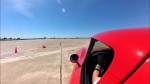 Brian Hobaugh SCCA National Tour June 2014
 First Hemi 'Cuda Convertible Ever Built
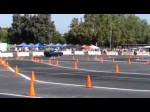 Short clips: Goodguys Pleasanton autocross and pit videos





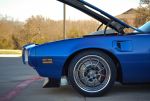


 Hybrid Mode
