I am building a 69 Torino. This is an original 390 4 speed car. Cool car to begin with but it needed to be stepped up a notch.
Here is where I am so far.
Engine
390 ported stock heads with oversize valves Ford aluminum PI intake and Factory CJ Holley 735 carb. Billet MSD distributor triggering an MSD digital 6 CD box through an MSD blaster coil and wires. Solid lifter cam research cam 230/236 @ .050 with 560 lift and matching springs and retainers, double roller timing chain, Precision oil pumps rockers, stands and shafts and smith pushrods. Percision oil Pumps blueprinted high volume oil pump and billet pump drive shaft. Canton T road race baffeled pan. Stock 11 to 1 shortblock for now. I have FPA headers waiting in the garage and plan on having Spintech install a side exit 2.5" exhaust with X crossover.
Trans
Currently I have the stock close ratio toplader in the car but I have a TKO 600, Mcleod aluminum flywheel, driveline specialties Kevlar clutch sitting in the garage.
Differential
Factory Ford nine inch with a Detroit locker and 3.70 gears.
Front suspension
RRS Koni coilover strut conversion with 12" discs with PBR dual piston calipers. TCP strut rods and Opentracker racing Road race lower control arms. Stambar adjustable 1" front sway bar.
Rear suspension
Rebuilt and rearched stock leafs with Koni red shocks. Caltracks low profile underside bars. Solid front spring eye bushings and urethane rear bushings. 11" RRS rear disc brakes with single piston PBR calipers. I have spoke with FAYs2 about building me a WATTS link for my rear. It is on it's way.
Stock power brake booster with a Willwood aluminum 1.125 master and all new stainless brake lines.
The car sits 2" lower in the rear and 3" lower in the front and rides on some custom Elaisian wheels. 17x8 front with 245/45/17 Firestone Firehawks and 17x9.5 rear with 285/40/17 Firestones.
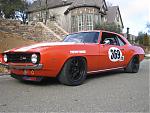
I'm swapping a 3g 130 amp alternator in this weekend and then working on designing some subframe connectors. When I done sorting out the suspension and driveline I want to paint the car the original Jade Black color but will still do the hood and taillight panel in the flat black (I sprayed them that way as an experiment for the look).
Different body than a 70. I will post pictures soon.
But those lights are a cool product. Who knows maybe they are working on or have a set for my year.
I'm sorting out an ignition issue and will have some pictures to post hopefully this weekend. Tha paint on the car now is a 20 footer but the body is prettty good so in photos it looks pretty good. The Paint will be the last thing so for now the pictures will only be so so.
I'm really in the mock up and road test R and D stage of building her now. I research what I think I want to do and install the pieces. Thrash it for a bit and then fix any faults I find and move on to modifying something else.
When I think I have a sorted out piece I'll paint it.
















 Brian Hobaugh SCCA National Tour June 2014
 First Hemi 'Cuda Convertible Ever Built
 Short clips: Goodguys Pleasanton autocross and pit videos





 1969 Torino






 Hybrid Mode
