As many of you may know my father fell suddenly ill while James Shipka and I were in the middle of the 2012 One Lap of America. The OLoA with James was something that I will always look back on with mixed emotions. There are the highs of winning the events, driving with James, and co-piloting one of the greatest cars ever on a bucket-list tour of America. Those are mixed with the lows of leaving James and my father’s passing. I don't just want to finish what I started, I need to, but not just for me.
In that light, a bit of history is in order. Please excuse me as I’m about to get very long-winded.
My Father
My father SSgt. Joe "Hook" Casanova served with the 3rd Infantry Division during WWII participating in every major landing and battle that the 3rd took on. North Africa, Sicily, Anzio, Southern France. Nasty places like Monte Casino, Tunisia, Battle of the Bulge, and concentration camps. It took its toll on my father and millions of other veterans, both physically and mentally. The physical part was easier to deal with than the mental, and was something he never was able to cope with well, especially in his later years. Here’s my dad after having the Silver Battle Star pinned on him by Gen. Patton. I have the watch displayed along with other items he saved in our living room.
 Honor Flight
I wanted to visit the WWII Memorial
http://www.wwiimemorial.com/default.asp?page=home.asp with my my father after it was built. Like so many proud men of the depression era, the only way I could get him to agree to go was if I signed him up for a program called Honor Flight
http://honorflight.org/ Honor Flight transports our veterans to visit THEIR memorials in Washington D.C. There are only two rules with Honor Flight: 1) The veteran must be accompanied by a Guardian, usually a family member to help with their needs, and 2) The veteran cannot pay for anything. The Guardian has to pay their own way. Honor Flight receives no goverment funding, it's all private donations.
We were fortunate to be chosen to go during the Memorial Day weekend of 2010. We travelled together on Southwest Airlines, each time being first on and off by the pilots’ request and announcement. We were greeted at the gate by the Honor Flight folks, the only organization that is allowed to do such things in this era of TSA-level security at the Baltimore airport.
We, along with a group of other WWII and Korean War veterans, stayed at the Hilton Baltimore hotel. The people there were some of the most gracious and generous hosts I’ve ever had the pleasure to meet. They made our stay a great one.
The day of the tour started with a bus ride on a super nice coach driven by a volunteer Vietnam veteran. On the way there videos were shown about the building of the WWII memorial and what to expect. What we got was something none of us expected.
The first visit was the WWII memorial. Do we park the bus and take a shuttle? Walk? No way, not for these guests of honor. The bus pulls up and parks right in front of the Memorial. No other organization is allowed to do that.
We visit the Memorial with my sister and her husband. My dad is wearing his 3[SUP]rd[/SUP] Division hat and is treated like a rock star by everyone. We have to pause several times during the visit to allow my dad (and us) time to reflect and collect our composure. It was a very emotional time for all of us, especially my dad, since he was finally letting go of a plethora of pent-up emotions after so many years.

So, what do a bunch of 80-90-year old vets do after that? How about visiting......
1) The Lincoln Memorial
2) Korean Memorial
3) Vietnam Memorial.
4) Iwo Jima Memorial
5) The Changing of the Guard at Arlington National Cemetery
6) The Air Force Memorial
7) The Navy Memorial.
At the Changing of the Guard a special place is set aside for the Honor Flight tour to view the ceremony. It’s opposite the main seating area and very close to the Tomb of the Unknown Soldier. When it was time for the spectators to stand up each one of the veterans, even the severely handicapped, stood up. There was no keeping these guys down. The Relief Commander adds a small and hardly noticeable change to the highly regimented routine: He drags his heels the last few steps before leaving as a sign of respect to the veterans.
The only way this can happen with a group like this is that at every Memorial the bus gets to stop right in front to let the veterans off. No other organization is allowed to do this.
Here's a great video with Honor Flight Chairman Jim McLoughlin explaining how it works. His words are far better than my feeble prose.
http://www.10tv.com/content/sections...mclaughlin.xml
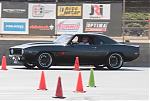
The Team Honor Flight Camaro is born.
The One Lap of America is known for raising money for charities. For me, it is a simple choice. I believe it would make my father happy, and hopefully help bring a bit of peace to other deserving veterans as it did with my dad.
My friend Jon Mahn will be the Honor Flight Camaro co-driver. Jon and I have been friends for 26 years. He spent many evenings at my father's home sharing dinner and a place to sleep while we went to college together. He was there when my dad was alive, and helped me more than I could ever thank him for after his death.
So, with the help and expertise of Ben Hermance
http://www.hermancedesign.com/, we came up with the concept of the Honor Flight Camaro. The best way I can describe Ben is “He gets it.” He knew exactly what I wanted and why. I wanted something simple so as to not make the theme a blur, but with just enough detail to make it known what the idea is. Ben also comes from a family with a military history so it came naturaly to him.

Why the gold stars? During WWII if a family member was killed a gold star was hung in window of the home. As an honor to those killed or never found, the Freedom Wall in the WWII memorial has a Field of Stars. There are 4,048 gold stars, each representing 100 killed or missing. That’s 404,800 killed or missing. One can't help but be overwhelmed with emotion when standing in front of that wall and what it represents.
 The Honor Flight Camaro Preparation for the One Lap of America
So, what’s planned for the Camaro in preparation for the OLoA? There are three main tasks that are in the works:
1) Reliability
2) Safety
3) Some aero and performance upgrades
For reliability several key systems will be addressed first: Brakes, rear differential, and electrical. Like most other things on the car they won’t be simple drop-in modifications, but certainly not top-flight either. The goal is to make reasonable changes that are cost effective and increase reliability. The changes will be posted here and on the new Honor Flight Camaro website
http://www.honorflightcamaro.com
With so many different tracks that we’ve never driven before and 3500 miles of mostly night driving, upgrading the safety of the car makes sense. The entire lighting system of the car has already been upgraded. HANS devices and restraint systems are on the way.
The aero dabbling that James, David, and I have been doing is starting to bear fruit. It’s going to be needed since Daytona is on the list this year, and that place is FAST. More testing after modifications will be needed, and more drawings by Ben will help show where we are going with the build. This build will be a bit different for me in that most everything is being based around a tire choice. Choosing a tire leads to a rim size choice leads to brake performance needs leads to spindle and suspension changes leads to …… All for a tire.
Over the next four months I’ll be outlining the changes and the why behind them in this thread. Preparing for the OLoA is a daunting task and it's going to be tight to get everything done. Breaking down 1500 miles from the start/finish line, and 2500 miles from home, is serious motivation to get everything as reliable and sound as possible.
If you would like to place a tax deductible donation to the Honor Flight organization, please do so my going here:
http://honorflight.org/donate/donation.cfm
In the “Comment or Tribute” section, PLEASE add “Honor Flight Camaro” This allows us to track how sucessful our efforts are. Without the generosity of others organizations like Honor Flight cannot exist.
Team Honor Flight Camaro is also on Facebook
http://www.facebook.com/#!/HonorFlightCamaro?fref=ts Please "Like" us on Facebook so the Honor Flight word can be spread far and wide.
Thank you for reading my tale, but I really hope that you will thank a veteran. Stay tuned......
















 Brian Hobaugh SCCA National Tour June 2014
 First Hemi 'Cuda Convertible Ever Built
 Short clips: Goodguys Pleasanton autocross and pit videos


 Team Honor Flight Camaro takes on the 2013 One Lap of America!











 Hybrid Mode
