|
|

02-19-2016, 03:48 PM
|
 |
Senior Member
|
|
Join Date: Dec 2005
Location: Maryland
Posts: 865
Thanks: 1
Thanked 49 Times in 25 Posts
|
|
The Ron's, that makes me laugh. The RS squared build, as Payton likes to call it. Have enjoyed working with RS, kind of nice to feel confident that the information given is correct, and I can go in guns blazing, with no fear of a cluster in my future. at least not where his design work is concerned.
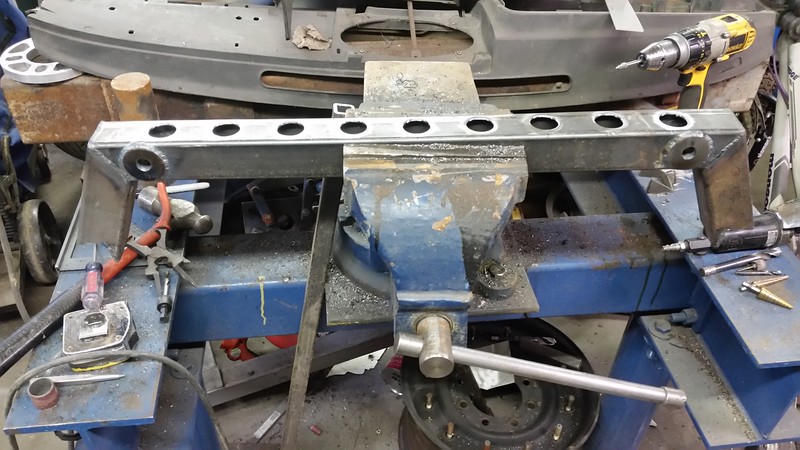
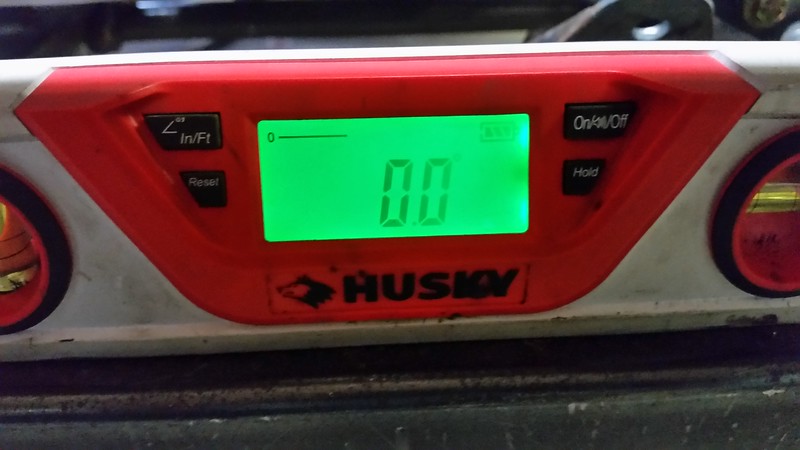
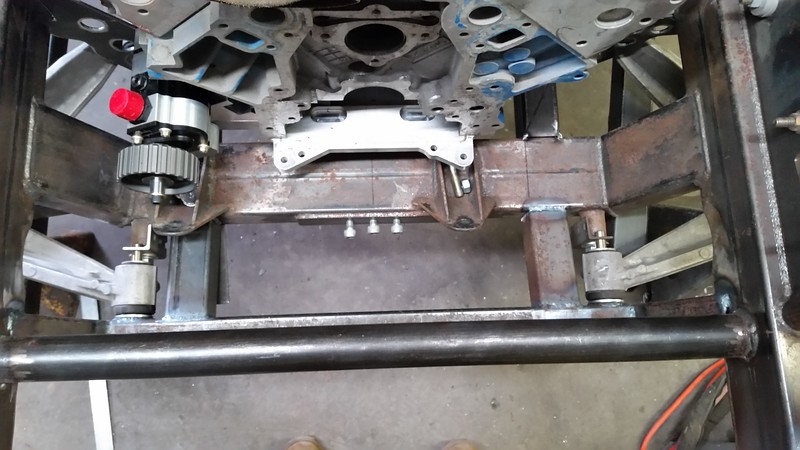
Did get the front side of the control arm semi-figured out, built a crossmember out of 2x2, welded in sleeves, then washers, holesawed the crap out of it, then installed. Not only did it fit, but it was 0.0 with my digital level. Even a blind squirrel.....


__________________
Ron Schwarz
|
02-19-2016, 04:13 PM
|
 |
Senior Member
|
|
Join Date: May 2013
Location: Folsom, CA
Posts: 2,422
Thanks: 45
Thanked 35 Times in 26 Posts
|
|
Looking great Ron !

__________________
Ron Sutton Race Technology
|
02-19-2016, 06:12 PM
|
 |
Moderator
|
|
Join Date: Dec 2010
Location: Pacific Northwet
Posts: 8,034
Thanks: 33
Thanked 102 Times in 41 Posts
|
|
Stellar Ron, you too Ron. 
|
02-19-2016, 06:26 PM
|
 |
Lateral-g Supporting Member
|
|
Join Date: Jul 2005
Location: Scottsdale, AriDzona
Posts: 20,741
Thanks: 504
Thanked 1,080 Times in 388 Posts
|
|
..... and he keeps plugging away!!
RS2
|
02-20-2016, 08:04 AM
|
|
Senior Member
|
|
Join Date: May 2013
Location: Folsom, CA
Posts: 2,422
Thanks: 45
Thanked 35 Times in 26 Posts
|
|

Hey Guys,
Over on Pro-Touring.com some guys on Ron Schwarz' thread were questioning running a Decoupled 3-Link on the street, so I shared an in-depth explanation of the Decoupled 3-Link traits. I thought I post the same tech here ... in case anyone reading along had similar questions.
----------------------------------------------------------------------------
Hey Everyone ... those of you posting & those of you reading along ...
I figured I'd jump on here real quick and clear up some things on the Decoupled 3-Link. I describe them as the most tunable, highest grip rear suspension linkage available for solid axle race cars.
Race cars. 
I'll get the street usage thing out of the way first, then discuss why Decoupled 3-Links work so well. I don't think of a Decoupled 3-Link as a street car suspension. It can be driven on the street ... just like race cars are driven on the street. But if someone was building a "driver" or what I think of a typical "Pro Touring" car they plan to drive primarily on the street ... and rarely or occasionally run autocross or track days ... I would not suggest a decoupled 3-link. The issue would be poor ride quality. On smooth roads, the ride quality will be fine. On typical bumpy roads the ride would be noticeably harsher. Hitting big potholes ... or tall speed bumps at speed ... would be the worst ... because the suspension can not travel straight up or down very far .. with low/no throttle. It doesn't go into a bind per se. It's just the spring rate from the bushings (2 red ones in this photo) in the Decel system goes up exponentially when the both tires push straight up equally when off throttle. On throttle ... it can move up & down freely ... because the Accel bushings (blue in this photo) are compressed ... and the Decel bushings (red) are not loaded at all.
What the decoupled system allows ... is for the rear end to articulate plenty within the chassis. So if a car with a Decoupled 3-Link drives on a normal street with occasional bumps ... each side can absorb the bumps it hits pretty much like any other suspension. If the bump is huge ... and hit at speed ... the compression amount would be great enough to get into the higher spring rate in the Accel/Decel system. So it would be more harsh than a other rear suspension styles. To summarize ... a Decoupled 3-Link rides fine on smooth roads, feels rougher on rough roads & would be very harsh driven over large potholes or speed bumps at speed.
So again, I would NOT recommend a Decoupled 3-Link for anyone building a "driver" or typical "Pro Touring" car they plan to drive primarily on the street. But Ron Schwarz is not building a cruiser. Neither are all my other clients that have chosen to go the Decoupled 3-Link route. I would call them "Very Mean Street Legal" cars or "Race Cars with License Plates." I suspect they WILL drive them on the street ... to the track or event they're going to. But each learned about the possible harshness ... as well as the advantages of the Decoupled 3-Link ... before choosing them.
Now if they want to drive them on the street & be comfortable ... the car can quickly be converted away from Decoupled 3-Links. With 3-bolts, they can replace the the Accel/Decel system with a regular top link. Then it will ride like any 3-link, 4-link, torque-arm car. In Ron Schwarz' case, he is also keeping the Torque Arm mounts, so he can compare them. I can't wait for that.
The reasons to go to a Decoupled 3-Link in these cars ... as the PT genre evolves more & more toward race car technology ... is the superior track performance. If a person can tolerate the car riding rougher to be bad ass on track ... it is worthy of considering. or if they're ok making the switch I mentioned ... with 3-bolts make it a normal 3-link ... and viola ... normal street ride. Before I go into the advantages of the Decoupled 3-Link ... it's important to understand what parts of the rear suspension affects the handling in the different parts of the corner.
Let's break driving the corner down into the 3 parts:
1. Corner entry ... where the driver is braking, then turning into the corner (and continuing to brake).
2. The "Roll Through Zone" where the driver steps off the brakes & lets the car "roll" through the corner ... before picking the throttle up.
3. Corner exit ... where the driver picks up the throttle & starts unwinding the steering wheel coming out of the corner.
* Some people ... even relatively experienced PT drivers ... don't recognize this "Roll Through Zone" concept because when they step off the brakes in their car, the front end shoots up (lifts) ... instantly causing the car to push. So they don't allow a "Roll Through Zone." They stay on the brakes all the way to the point they need to pick up the throttle. This is not ideal, as using the brakes to keep the front end down scrubs off way more speed. In professional racing, we use special shock pistons, bleeds & valving to keep the front end down ... when the driver lifts off the brake ... so the car can roll and keep higher cornering speed ... versus continued deceleration from constant braking.
Ok. Time to shine some light on the rear suspension functionality. The choice of rear suspension type ... 3-Link, 4-Link, Torque Arm, Truck Arm, 19-Link, etc ... has NO effect on the car's handling in the Roll Through Zone. I know. What ??? And ... the anti-squat percentage, instant center location, length of arm, etc, etc ... have NO effect on the car's handling in the Roll Through Zone. The suspension linkage acts as a mechanical lever when torque is applied. There is no torque being applied to the rear end (or rear suspension) in the Roll Through Zone. No brake torque & no engine torque.
So what affects the car's rear grip in the Roll Through Zone? A lot.
Tire width
Tire Contact Patch
Tire Camber
Tire compound (softness/bite)
Spring Rate
Sway Bar Rate
Weight Mass (rear specifically)
CG
Roll Center
Track Width
Shock Valving
... just not the suspension linkage.
I hear someone asking ... as happens at the workshops ... "So Ron, what does the rear suspension linkage ... and it's settings like anti-squat percentage, instant center location, length of arm, etc, ... affect?" Everything to do with corner entry ... before the Roll Through Zone ... and everything to do with corner exit ... after the Roll Through Zone. So when we're choosing a rear suspension linkage ... and setting it up ... our focus needs to be on getting into the corner ... and out of the corner ... the quickest way possible.
With a torque arm, regular 3-Link, 4-Link, truck arm, etc ... the instant center location defines the swing arm length & anti-squat percentage of the rear suspension.
* If we move the instant center location closer or up ... we are increasing the loading on the tires for increased corner exit grip ... but decreasing the loading on the rear tires for decreased corner entry grip.
* If we move the instant center location forward and/or down ... we are decreasing the loading on the tires for decreased corner exit grip ... but increasing the loading on the rear tires for increased corner entry grip.
* It is ALWAYS a compromise. So knowledgeable tuners/builders choose their rear suspension weapon & set it up appropriately to have the best compromise they think will produce the quickest laps ... or in some cases ... will provide the feel the driver wants. (Some drivers are ok with a loose car on exit but not entry & vice versa.)
This is where the Decoupled 3-Link can out perform every other solid axle rear suspension. There doesn't have to be a compromise with a Decoupled 3-Link. The Decel link can be set where the car has amazing corner entry grip to drive in deep ... see Elvis ... and then brake safely with full grip. The Accel link can be set where the car has amazing corner exit grip ... to roll the throttle on quicker & harder ... and giddy up out of the corner better than any other set-up. The Decoupled 3-Link is so good many racing sanctioning bodies outlawed them back in the 90's. But we don't have to follow those rules in the PT, Optima, Good Guys, track Car world.
[ATTACH=CONFIG]124130[/ATTACH]
Some Racing Sanctioning bodies still allow Decoupled 3-Links ... as long as there is no damper as part of the design. With good reason. When we add a damper (shock) with the right valving & response rate ... the grip is amazing. It calms the car down when accelerating full throttle out of the corner & smooths out the gear shifts. It makes a high powered race car ... easier to drive fast.
And ... if we utilize a double adjustable shock ... and make the shock cable adjustable from the driver cockpit ... the driver can tune the rear suspension to any track conditions in an instant. Need more rear grip on exit? Turn the Accel knob one way. Too much rear grip on exit (pushing)? Turn the knob the other way. Need more rear grip on corner entry under hard braking? Turn the Decel knob one way. Too much rear grip on corner entry ? Turn the knob the other way. No climbing under the car to tune it. Grab a handful of rear grip whenever you need it. Give some back if you got greedy.
__________________
Ron Sutton Race Technology
|
|
The Following User Says Thank You to Ron Sutton For This Useful Post:
|
|
02-20-2016, 08:16 PM
|
|
Senior Member
|
|
Join Date: Dec 2005
Location: Maryland
Posts: 865
Thanks: 1
Thanked 49 Times in 25 Posts
|
|
__________________
Ron Schwarz
|
02-24-2016, 03:06 AM
|
|
Senior Member
|
|
Join Date: Dec 2005
Location: Maryland
Posts: 865
Thanks: 1
Thanked 49 Times in 25 Posts
|
|
Torquedork just posted this over on PT. I am kind of digging the Mark Donahue spoiler, what do you think?

__________________
Ron Schwarz
|
02-24-2016, 05:41 AM
|
|
Senior Member
|
|
Join Date: Jan 2009
Posts: 132
Thanks: 0
Thanked 6 Times in 5 Posts
|
|
Quote:
Originally Posted by 57hemicuda

Torquedork just posted this over on PT. I am kind of digging the Mark Donahue spoiler, what do you think?
|
YEEEESSSS!! That works so nicely with the front flares and curves! Awesome work as per usual good sir!
__________________
Stephen S.
|
02-24-2016, 11:49 AM
|
 |
Senior Member
|
|
Join Date: Jun 2011
Posts: 169
Thanks: 0
Thanked 1 Time in 1 Post
|
|
Yeah Ron. Spoiler examples. The Orange 1970 version will fit your car.

Managed to add it to this shot I tweaked with the tweaked quarters.

__________________
https://www.youtube.com/watch?v=oBMM0u5eCqg
SPONSORS: Edelbrock, Holley, PPG Bilstein, Classic Industries, Heidts, Eaton Detroit Spring, Energy Suspension, Stainless Steel Brakes, Phoenix Graphix, Classic Tube, Legendary Auto Interiors, Pertronix, Patriot Exhaust
|
02-24-2016, 12:18 PM
|
 |
Lateral-g Supporting Vendor
|
|
Join Date: May 2007
Location: Pella, Iowa
Posts: 665
Thanks: 91
Thanked 93 Times in 35 Posts
|
|
I'm liking this build. Good stuff
__________________
Brycen Smith- Owner, Builder @ PRD Design LLC
641.619.5859
www.prddesign.com
[email protected]
Instagram: @fabrycatedmetal @project_ruptured_duck
Partners: Miller Welders, Tremec, Ford Performance,
Dakota Digital, VintageAir, Holley, Quicktime, Hays,
Sutton Designs, Black Widow Exhaust,
Pacific Coast Powder Coat, DEI Engineering
VisionX Lighting, Musclerodz, Hot Rods By Boyd,
Cato's Custom Upholstery, Wilwood Disc Brakes,
East Bay Muscle Cars, Ridetech, SendCutSend, Coastal Curved Glass, IWON Inc

|
 Posting Rules
|
You may not post new threads
You may not post replies
You may not post attachments
You may not edit your posts
HTML code is Off
|
|
|
All times are GMT -7. The time now is 11:22 PM.
|
















 Brian Hobaugh SCCA National Tour June 2014
 First Hemi 'Cuda Convertible Ever Built
 Short clips: Goodguys Pleasanton autocross and pit videos




 Linear Mode
