Hey guys,
I ran across an add about the new Ez-EFI system from FAST. Does anyone have any opinions on the system? It looks to be a pretty good upgrade for a weekend cruiser to increase driveability. Thoughts?
I just got off the phone with Carl Wegner of Wegner Motorsports fame. Had a 1 hour conversation about the EZ EFI and long story short, he loves it! Has been dyno testing it and said it makes the exact same power as a 4 barrel of equal size, but has all the driveability of the fuel injection.
Sounds like a cool easy system, I am going to try one on something very soon.
Hey guys,
I ran across an add about the new Ez-EFI system from FAST. Does anyone have any opinions on the system? It looks to be a pretty good upgrade for a weekend cruiser to increase driveability. Thoughts?
I've used the older FAST stuff several times and loved it. Off of those experiences I would think this system would work great, as long as you weren't doing a forced induction or wild setup.
600 hp cap is kind of a bummer. I like the idea of keeping the stock carb appearance but I know I'll end up bumping up my power level eventually and I'm already at the ceiling.
600 hp cap is kind of a bummer. I like the idea of keeping the stock carb appearance but I know I'll end up bumping up my power level eventually and I'm already at the ceiling.
Contact Wegner Automotive, I think they will be able to sort that issue for you.
THANKS TO: A&M Machine and Fabrication, CCTek (http://www.candctek.com), Hermance Design(www.hermancedesign.com), Paradise Road Rod & Custom, Harry Opfer Welding, Wegner Automotive Research, Clayton Machine Works
600 hp cap is kind of a bummer. I like the idea of keeping the stock carb appearance but I know I'll end up bumping up my power level eventually and I'm already at the ceiling.
The cap is 650 I believe if you bumped up the fuel pressure to 60PSI.
















 Brian Hobaugh SCCA National Tour June 2014
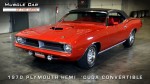 First Hemi 'Cuda Convertible Ever Built
 Short clips: Goodguys Pleasanton autocross and pit videos



 Thoughts on the FAST Ez-EFI system??






 Hybrid Mode
